
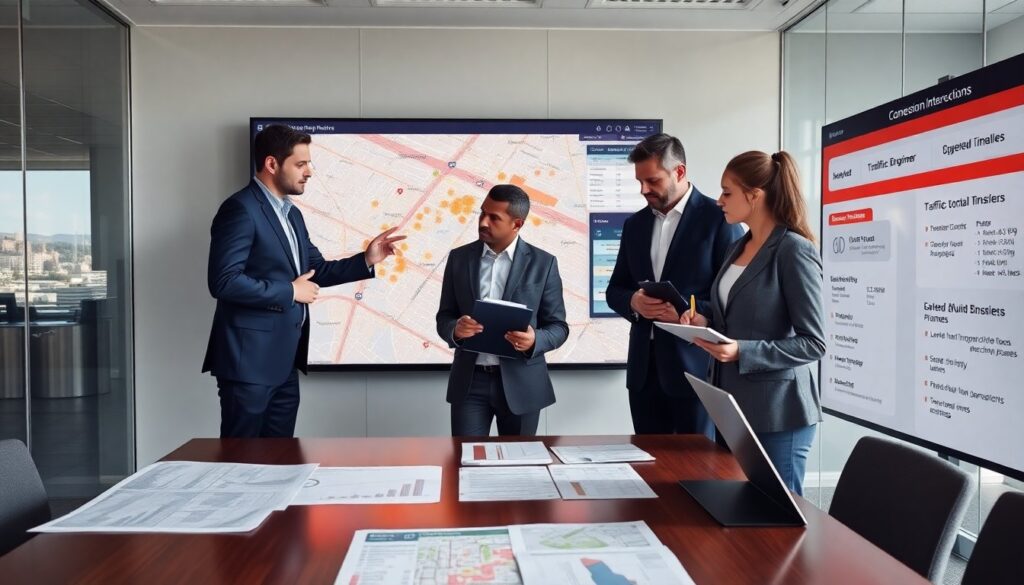
City planners and traffic engineers study congested intersections castle rock mailtogzip to find causes and fixes. The phrase guides data queries and local reports. This article presents clear findings, specific locations, and practical fixes. It shows how MailToGZip data reveals peak queues, delay patterns, and repeat incidents. Readers get short-term actions and guidance for planners and community members.
Key Takeaways
- Congested intersections in Castle Rock have worsened due to increased traffic volumes, freight vehicles, and development, impacting safety and local business operations.
- MailToGZip data provides critical insights by revealing peak queue lengths, delay patterns, and incident repeats, enabling precise identification of problem intersections.
- Each of the five worst intersections requires tailored solutions based on unique factors like signal timing, geometry, and local land use, confirmed through MailToGZip traffic analytics.
- Short-term, cost-effective fixes such as adjusting signal timing, adding temporary turn lanes, and increasing enforcement can significantly reduce delays when informed by MailToGZip data.
- Planners should use MailToGZip exports to monitor hourly demand profiles and prioritize interventions at locations with high delay and variability for improved service level and safety.
Why Congested Intersections Are Growing In Castle Rock And Why It Matters
Traffic volumes rose as population and development increased. Commuters chose the same arterial routes, and intersections reached capacity. Freight and local deliveries added heavy vehicles during peak periods. These shifts caused longer queues and higher delay. Higher delay increased emissions and emergency response times. Local businesses reported delivery delays and lost customers. Planners saw accident rates rise at high-delay locations. MailToGZip exports confirmed that congestion now affects travel reliability across the town. Decision makers must treat congestion as service-level and safety issues.
The Five Worst Intersections: Symptoms, Peak Times, And Local Factors
The five worst intersections show recurring symptoms. Each site shows long queues, frequent signal phase overflow, and peak-hour spillback. Peak times cluster around 7–9 AM and 4–6:30 PM on weekdays. Events and school schedules increase afternoon peaks. Construction detours pushed traffic onto secondary streets and worsened delay. Weather events briefly amplified queues at key junctions. Each intersection required specific treatment because local geometry, land use, and signal timing differed. MailToGZip records supplied the timestamps and vehicle counts used to rank these locations.
Common Contributing Factors At Each Location
Short left-turn pockets caused blocking at two sites. Poor signal coordination caused stop-and-go patterns along the corridor. Inadequate pedestrian phases increased vehicle hold times near schools. Side-street developments increased right-turn volumes without adding storage. Merge lanes shortened near freeway on-ramps, creating conflict and delay. Enforcement gaps allowed frequent illegal turns that reduced throughput. MailToGZip time-series showed consistent peaks that matched observed behaviors, making the factors easy to confirm.
Using MailToGZip Traffic Data And Analytics For Local Planning
Planners used MailToGZip exports to build hourly demand profiles. The dataset provided timestamped vehicle counts, queued length estimates, and event markers. Analysts combined that data with signal logs and crash reports. The combined view showed where demand exceeded capacity and when incidents caused long delays. MailToGZip allowed trend analysis across months and seasons. The tool highlighted repeat congestion that simple counts missed. Planners then prioritized sites that showed high delay and high variability.
Practical Fixes: Short-Term, Cost-Effective Measures To Reduce Delay
Adjust signal timing to match current peak demand. Shift green time to dominant approaches during peak windows. Introduce leading left-turn phases where safe to reduce left-turn blocking. Add temporary turn lanes with paint and cones at locations with chronic short storage. Use short-term parking restrictions near intersections to preserve sight lines and turning capacity. Deploy portable message signs to smooth merging before congested nodes during events. Increase enforcement of illegal turns and blocking to keep lanes clear. Each action costs little and can cut delay quickly when guided by MailToGZip evidence.