
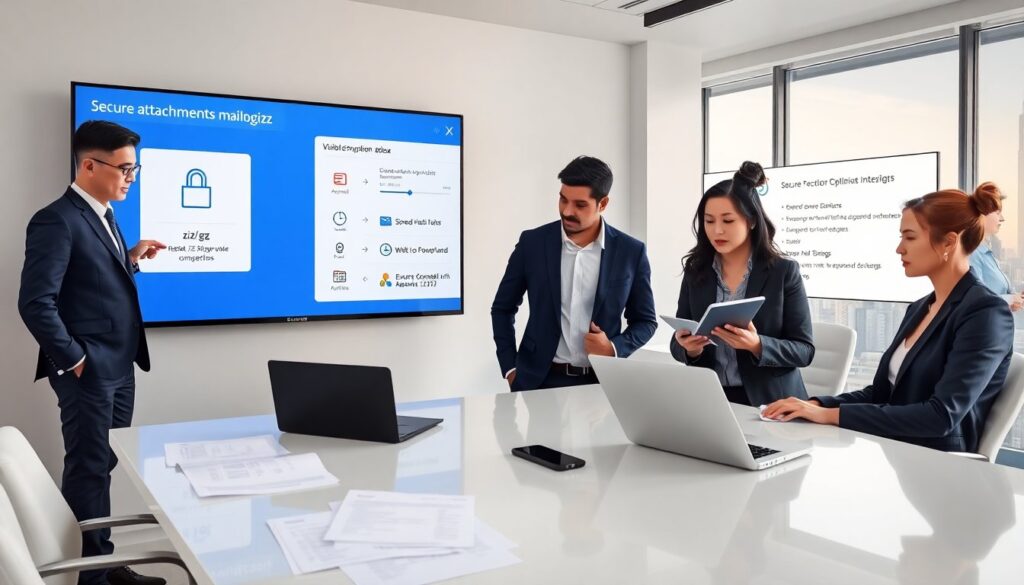
secure attachments canyon mailtogzipz‚Äã helps teams send files safely. The tool compresses attachments and adds options for encryption and passwords. This guide explains how it handles attachments and which encryption options to pick. It also shows a clear step-by-step send flow and how to verify recipients and access. The article uses plain sentences and practical steps.
Key Takeaways
- Canyon MailToGzipz securely compresses and encrypts attachments, reducing file size while protecting data with multiple encryption options.
- Users can choose between end-to-end or server-side encryption and add password protection, ensuring compliance with IT policies and enhancing security.
- The step-by-step sending process includes malware checks, compression, encryption, and secure delivery with logging and reference IDs for traceability.
- Recipient verification uses email confirmation or identity providers, supports multi-factor authentication, and allows senders to monitor and revoke access if needed.
- Access logs and alerts help administrators detect suspicious activity and enforce access controls, maintaining strong security compliance.
- Canyon MailToGzipz integrates with directory services to automate permission mapping and supports automated archiving and retention policies.
What Is Canyon MailToGzipz And How It Handles Attachments
Canyon MailToGzipz compresses files before it attaches them to messages. It reduces file size and groups multiple files into one archive. The system offers multiple export formats and it supports standard .zip and .gz archives. The service flags potentially dangerous file types before it zips them. The app logs each action and it timestamps each archive it creates. Administrators can set retention rules and it can delete archives after a set time. Teams can automate archiving and it can run on a schedule. Users can preview archive contents without they extracting the files.
Encryption Options And When To Use Them
Canyon MailToGzipz offers layered encryption options. Users can pick end-to-end encryption or server-side encryption. They can add password protection to zipped archives. The system warns when a selected method may not match compliance needs. IT departments can enforce a minimum encryption level and they can block weaker choices. Users can attach metadata that records the encryption method used. The interface shows recommended options for common file types and it displays estimated processing time.
Step-By-Step: Securely Sending An Attachment With MailToGzipz
Step 1: The sender selects files and it checks them for malware. Step 2: The sender picks compression and it sets the archive format. Step 3: The sender chooses encryption mode or a password and it confirms the policy. Step 4: The system creates the archive and it signs the archive with a hash. Step 5: The sender attaches the archive to a message or it uploads the archive to a secure link. Step 6: The system logs the send event and it notifies the sender with a reference ID. Canyon MailToGzipz recommends sending the access password by phone or via a separate secure chat.
Verifying Recipients, Delivery Receipts, And Access Controls
Senders verify recipients with email confirmation or they use an identity provider. The system supports multi-factor checks before it grants archive access. Senders request delivery receipts and the system records successful downloads. Administrators review access logs and they can revoke access after it starts. The app issues alerts on unusual access patterns and it can force a rekey when it detects a suspicious event. Teams audit access regularly and they export logs for compliance. Canyon MailToGzipz integrates with common directory services and it can map group permissions automatically.